Why More Patients Are Getting Dental Crowns in Los Angeles CA

Anyone who has spent time in a busy Los Angeles dental office has seen the pattern. Patients are not only coming in for cleanings and whitening anymore. More of them are asking detailed questions about cracked molars, worn-down teeth, old silver fillings, bite changes, and how to save a tooth before it turns into a bigger problem. That shift helps explain why more people are choosing dental crowns in Los Angeles CA.
A crown used to be something many patients associated with major dental work, often after a root canal or a badly broken tooth. That still happens, of course. But the modern role of a crown is broader and, in many cases, more preventive. Dentists now use crowns to reinforce compromised teeth earlier, restore function more precisely, and match aesthetics far better than in the past. In a city where people care about appearance, longevity, convenience, and overall health, crowns fit into real needs rather than cosmetic trends alone.
The reasons behind this increase are practical. Teeth last longer than they used to because more people keep their natural teeth into middle age and beyond. At the same time, those older teeth often carry decades of fillings, grinding, acid wear, stress fractures, and bite strain. A crown can be the right answer when a tooth is no longer strong enough for a simple filling but does not need extraction. In many Los Angeles practices, that clinical middle ground is where much of the growth is happening.
Crowns are no longer a last resort
Many patients still imagine a crown as a sign that a tooth is in terrible shape. That assumption is outdated. In day-to-day practice, crowns are often recommended because a tooth is salvageable, not because it is beyond hope.
Take a common example: a patient has an older molar with a large filling placed fifteen or twenty years ago. Over time, that filling weakens the remaining tooth structure. Tiny cracks can form. The patient may notice cold sensitivity, pain when chewing, or a sharp twinge when biting on one side. The tooth may not need a root canal. It may not be visibly broken. But if too much natural structure has been lost, replacing the filling with another filling can be risky. The material does not always solve the core issue, which is that the tooth walls are flexing under pressure.
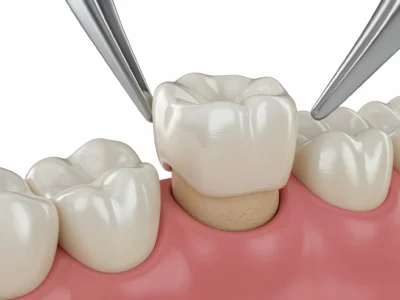
A crown covers and supports the tooth, redistributing force and reducing the chance of a catastrophic fracture. That is often the difference between preserving a tooth for many years and losing it suddenly over a weekend after biting into a crust of bread or a piece of ice.
This is one of the most important reasons patients are getting more dental crowns in Los Angeles CA. People are catching problems earlier, and dentists are intervening before the damage becomes irreversible.
Los Angeles lifestyles put real stress on teeth
There is no single “Los Angeles patient,” but certain habits and pressures show up often enough to matter. Crowns are becoming more common partly because modern life is hard on teeth.
Stress-related clenching and grinding are major factors. Many patients do not realize they grind until a partner hears it at night, or a dentist spots flattened chewing surfaces and hairline cracks. Grinding can wear enamel down slowly or split a tooth with little warning. Even patients who seem too young for major restorative work sometimes arrive with worn front teeth and fractured molars.
Diet also plays a role. Frequent coffee, citrus drinks, sparkling water, sports beverages, energy drinks, and late-night snacking all contribute to enamel wear and recurrent decay around older restorations. None of those habits automatically mean someone needs a crown, but they can push a borderline tooth over the line.
There is also the issue of postponement. In a city where schedules are packed and commutes are long, many people live with a “manageable” dental problem longer than they should. A missing chunk of a tooth may not hurt much at first. A filling that feels slightly rough may not seem urgent. By the time the patient comes in, the restoration option has narrowed. What could have been a modest repair six months earlier may now require full coverage.
Better materials have changed patient attitudes
Crowns used to carry a reputation for looking artificial or bulky. Older generations often remember opaque porcelain, visible dark lines near the gums, or metal crowns that were functionally sound but obvious. Modern materials have changed that perception.
Today, many crowns are made from high-strength ceramic or zirconia that can be shaped with impressive precision and matched closely to natural teeth. In the right case, they blend in so well that even detail-oriented patients forget which tooth was restored. That matters in Los Angeles, where camera-ready smiles are part of daily life for some patients and simply a matter of self-confidence for others.
This improvement is not only cosmetic. Better materials can also support stronger, more conservative preparations in selected cases. Digital scans have improved fit. Milling and lab workflows have become more reliable. Temporary crowns are often more comfortable than they used to be. These details may sound technical, but they shape the patient experience in a big way.
When patients believe a crown will look natural and feel normal, they are far more willing to accept treatment before the tooth becomes an emergency.
Cosmetic awareness plays a role, but function usually drives the decision
It would be easy to frame the rise in crowns as a vanity story, especially in Los Angeles. That misses what actually happens in most treatment rooms. Aesthetics matter, but function is usually the deciding factor.
A front tooth with internal staining, a large old bonding repair, or a fracture line may be both a cosmetic concern and a structural concern. In those situations, patients often start by saying they dislike the appearance. Once the exam and imaging are done, the bigger issue turns out to be weakness, leakage around old work, or loss of tooth structure.
Back teeth tell a similar story. A patient may not care how a molar looks at all, but they care very much when chewing becomes unreliable. If a tooth hurts every time pressure lands on one corner, life gets small quickly. People stop chewing on that side. They avoid certain foods. Jaw soreness can develop from compensating. A well-made crown can restore not just the tooth but normal daily function.
That practical value is one reason demand continues to rise. Crowns are not glamorous treatment. They are dependable treatment.
The aging of old dental work is a bigger issue than many people realize
A great deal of crown treatment is not about new decay. It is about old dentistry reaching the end of its lifespan.
Fillings do not last forever. Bonded materials can stain, shrink, chip, or leak over time. Teeth that have already been drilled and restored several times become structurally vulnerable. Each replacement restoration often requires removing a little more tooth. Eventually the remaining structure is too thin or unsupported to trust with another direct filling.
Dentists in Los Angeles see this every day in patients who have had decent care for years but are now entering a stage when earlier repairs need more comprehensive solutions. Someone in their forties, fifties, or sixties may have a mouth full of work that has aged in parallel. It is not unusual for one failing filling to reveal a broader pattern: cracked cusps, recurrent decay, weakened root canal teeth, and bite wear that has built up gradually.
In that context, the increase in crowns makes perfect sense. More patients are maintaining their natural teeth longer, but those teeth often need reinforcement to remain serviceable.
Implant planning and restorative dentistry often intersect
Crowns are also more visible today because they sit at the center of several kinds of dental treatment, not just one. They may cap a natural tooth, complete a dental implant, anchor certain bridge restorations, or restore a tooth after root canal therapy.
That wider role means patients hear about crowns more often during comprehensive planning. A person who comes in for one missing tooth may leave understanding that the neighboring tooth also has a large fracture and needs coverage. Another patient seeking cosmetic improvement may learn that two worn front teeth would be better served by crowns than repeated bonding. As diagnostics improve, restorative conversations become more interconnected.
This does not mean crowns are being overused across the board. It means they are part of a larger treatment vocabulary now, and patients are more educated about what they can do.
Technology has made the process easier to accept
For many patients, fear of the process used to be as much of a barrier as fear of the diagnosis. Messy impressions, poorly fitting temporaries, numbness that lingered half the day, and multiple disruptive appointments kept some people from moving forward.
That experience has improved in many offices. Digital scanning has reduced the need for traditional impression material. Shade matching can be more accurate. Some practices offer same-day crowns in appropriate cases, though not every tooth or material is best suited to that approach. Even when a laboratory-made crown is the better choice, the process is often smoother and more predictable than it was years ago.
Patients talk to one another. They read reviews. They compare experiences. If their friend says a crown appointment was straightforward and the tooth felt better almost immediately, that lowers the emotional hurdle.
From a practice perspective, technology also helps dentists diagnose cracks, assess bite forces, and communicate findings more clearly. When patients can see a magnified image of a fractured cusp or recurrent decay under an old filling, the recommendation feels concrete rather than abstract.
Insurance, financing, and the economics of keeping a tooth
Cost remains a real factor. No honest discussion about crowns should pretend otherwise. A crown is more expensive than a filling, and in Los Angeles fees vary widely depending on the office, the material, the complexity of the case, whether a specialist is involved, and whether additional treatment such as buildup or root canal therapy is needed.
Yet patients increasingly view crowns through a long-term lens. Losing a tooth and replacing it later with an implant or bridge is typically far more expensive and more time-consuming. Repeatedly patching a failing tooth can also add up, especially if the underlying problem is structural rather than superficial.
Patients often weigh the following practical questions before deciding:
- Is this tooth likely to break further without full coverage?
- Would another filling be a short-term fix instead of a durable repair?
- How much natural tooth remains?
- What happens if I wait six months or a year?
- Is preserving this tooth simpler than replacing it later?
That is usually a more realistic conversation than asking whether a crown is “worth it” in the abstract. Worth depends on the condition of the tooth, the patient’s bite, hygiene, habits, and goals.
More patients understand the cost of waiting
One of the clearest shifts over the past several years is that patients are more aware of what delay can do. They have seen a spouse crack a tooth. They have gone through a painful emergency themselves. They know that dentistry tends to get more invasive, not less, when problems are ignored.
A tooth that needs a crown today may need a crown buildup and root canal six months from now if the crack deepens or decay reaches the nerve. If the fracture extends below the gum or into the root, the tooth may become unrestorable. At that point, the treatment path changes entirely.
This is not a scare tactic. It is the ordinary biology of stressed teeth. Enamel does not heal itself. Cracks can propagate. Bacteria exploit margins and weak spots. Chewing forces do not take a break while someone waits for a “better time.”
That growing awareness is pushing more patients to accept treatment before they are forced into it.
Not every tooth needs a crown, and good dentists know the difference
The rise in crowns should not be mistaken for a one-size-fits-all solution. Some teeth are better treated with onlays, bonding, or conservative fillings. Others are too compromised to justify a crown and may need extraction instead. The best restorative decisions are case-specific.
Experienced dentists look at more than the hole or crack in front of them. They consider bite patterns, gum health, root condition, remaining tooth structure, cavity risk, parafunctional habits, and whether the patient will wear a night guard if grinding is part of the problem. A beautiful crown placed on a tooth with poor support, untreated clenching, or unresolved periodontal issues may fail sooner than expected.
Patients benefit from asking why a crown is recommended instead of a filling or onlay. The answer should be specific. “Because the tooth has lost two marginal ridges and the lingual cusp is cracked” is a much better explanation than “because that’s the standard treatment.” Good treatment planning always has a reasoned basis.
What tends to surprise patients after treatment
Once the crown is in place and properly adjusted, many patients are surprised by how ordinary the tooth feels. That is a compliment. The best restorative work disappears into normal life.
Some people also realize, only afterward, how much they had been compensating. They had been chewing on one side for months. They avoided nuts, crusty bread, or cold drinks. They woke with jaw tension but did not connect it to a compromised tooth and nighttime clenching. Restoring one tooth can improve comfort in ways that are easy to underestimate beforehand.
There is, however, a learning curve in certain cases. If the bite has been uneven for a long time, a newly restored tooth may feel “high” even when the occlusion is clinically accurate, simply because the patient has adapted to dysfunction. A small adjustment visit is not unusual. Sensitivity can also occur temporarily after preparation, especially if the tooth had a deep existing filling. Most of these issues settle, but they are worth discussing honestly before treatment.
Choosing the right office matters in a city with endless options
Los Angeles offers every style of dental practice, from boutique cosmetic studios to family offices that have treated multiple generations. For crowns, the basics matter more than branding.
Patients should look for a dentist who explains the diagnosis clearly, discusses alternatives, evaluates the bite carefully, and pays attention to fit and margins. Lab quality matters. So does follow-up. A rushed crown that looks nice in a photo but traps food or throws off the bite can create months of frustration.
A thoughtful Dental Crowns Los Angeles CA office will also talk about protection after treatment. If the patient grinds, a night guard may be part of preserving the investment. If recurrent decay is the main problem, crown placement alone will not solve the habit or hygiene pattern causing it.
The increased demand for dental crowns in Los Angeles CA reflects not only patient preferences but also a broader shift toward preserving teeth more strategically. People want solutions that look natural, function well, and last. Crowns often meet that need when a tooth has crossed the line from simple repair to structural risk.
Why the trend is likely to continue
The forces driving this trend are not temporary. People are retaining their natural teeth longer. Restorative materials keep improving. Stress and grinding remain common. Patients are more educated about treatment than they were a generation ago, and they are less willing to live with discomfort or instability in their bite.
At the same time, the standard for what counts as acceptable dental function has risen. Patients do not just want a tooth that is technically present. They want a tooth that lets them chew comfortably, smile confidently, and stop worrying about the next crack, chip, or flare-up.
That is why crowns have become more common. Not because they are trendy, and not because every tooth needs one, but because they solve a very specific and increasingly common problem. When a tooth is too damaged for a filling and too valuable to lose, a crown often becomes the most sensible choice.
For many Los Angeles patients, that choice is happening earlier, with better materials, clearer planning, and a stronger understanding of what is at stake. That is usually a sign of smarter dentistry, not more aggressive dentistry.
Simple Dental Vermont
Address: 8914 S Vermont Ave, Los Angeles, CA 90044
Phone number: +13239493000
FAQ About Dental Crowns Los Angeles CA
How much do crowns cost per tooth?
In the United States, a single dental crown typically costs between $800 and $2,500 per tooth without insurance. The ultimate out-of-pocket price depends heavily on the crown material, the location of the tooth, and whether you have dental insurance coverage.
What is the downside of crowns on teeth?
The primary downside of a dental crown is that the procedure permanently removes natural tooth enamel to shape the tooth for the cap.
Why do dentists push for crowns?
Dentists recommend crowns because a large filling cannot provide enough strength when a tooth loses a major portion of its structure or faces heavy chewing pressure.